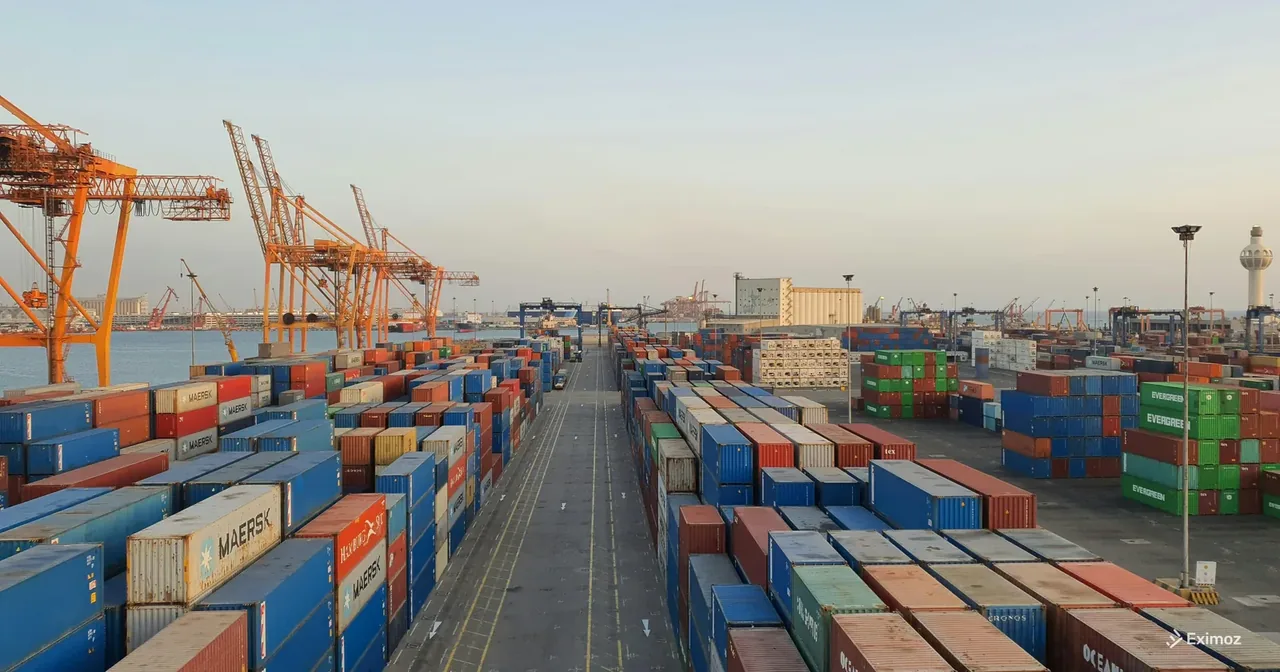


India-EFTA TEPA (Trade and Economic Partnership Agreement), signed 10 March 2024 and effective 1 October 2025, grants Indian exporters tariff-free or concessional access to Switzerland, Norway, Iceland, and Liechtenstein — the four EFTA nations — covering 99.6% of India's export value with a binding $100 billion EFTA investment commitment into India over 15 years. For trade compliance teams and exporters, TEPA's rules of origin framework is the critical piece: get these wrong and your products do not qualify for the preferential tariffs the agreement promises.
This article covers what the deal means in practice, how rules of origin actually work, what the product-specific criteria require, and how to use the cumulation provisions correctly.
What Is India-EFTA TEPA?
TEPA is a preferential trade agreement between India and the four member states of the European Free Trade Association. India's ratification is complete. Switzerland and Liechtenstein ratified together in March 2024 and the agreement became operational for them in October 2025. Norway's ratification process was underway as of April 2026, with the third India-Norway Dialogue on Trade and Investment held that month focused on TEPA implementation. Iceland's ratification is at an earlier stage.
The headline numbers are significant: EFTA countries committed $100 billion in investment into India over 15 years, targeting manufacturing, infrastructure, and technology. In return, Indian exporters gain substantially improved market access across a wide range of goods and — for the first time in an Indian FTA — some professional services credentials are recognised across borders.
The practical value of TEPA depends entirely on whether your product meets the rules of origin. That is the test that determines whether preferential tariffs actually apply.
Which Countries Are in EFTA?
Understanding who the EFTA states are matters for export planning.
Switzerland is by far the largest bilateral trade partner. Annual India-Switzerland commerce exceeds $25 billion. Swiss tariffs on industrial goods had already been eliminated unilaterally in 2024 — before TEPA fully took effect — making Switzerland effectively the first EFTA state fully open to Indian goods. Key Indian exports include pharmaceuticals, chemicals, gems and jewellery, and machinery. Switzerland is where most Indian exporters will first look under TEPA.
Norway is the second-largest EFTA economy with bilateral trade of around $4–5 billion annually, primarily in seafood, machinery, and industrial equipment. TEPA ratification was in progress as of early 2026. Exporters targeting Norway should monitor DGFT Trade Notices for ratification confirmation before relying on preferential tariffs.
Iceland has the smallest economy in EFTA and modest bilateral trade with India. Its ratification timeline follows Norway's. Iceland's opportunities are niche — seafood processing and renewable energy cooperation — but not insignificant for the right exporter.
Liechtenstein is a highly industrialised microstate integrated with Switzerland and the EU through customs unions. It ratified TEPA alongside Switzerland in March 2024 and became operational in October 2025. India-Liechtenstein trade is modest in volume but includes precision instruments, machinery, and specialty goods.
India ranks among EFTA's largest trading partners outside the EU. The relationship is strategically important for both sides.
Rules of Origin Under TEPA: The Basics
Rules of origin are the criteria that determine whether a product qualifies for preferential tariff treatment under TEPA. Without meeting these requirements, a product is treated as if the agreement does not exist — full MFN tariffs apply regardless of the trade deal on paper.
TEPA uses product-specific rules. There is no single universal rule; each HS code has an associated rule in the agreement's annexes, available from the EFTA Secretariat's TEPA documentation or the Press Information Bureau press release on TEPA. Exporters in textiles, chemicals, plastics, machinery, and processed foods should cross-reference their HS codes with those annexes directly.
The three main types of product-specific criteria under TEPA are:
Wholly obtained criteria: Some goods must be produced entirely in India or an EFTA state — no foreign inputs at all. This applies to agricultural goods harvested from the ground, minerals extracted from the earth, and products made entirely from originating materials.
Regional Value Content (RVC): This measures how much of the product's value was added in India or an EFTA country. The formula is:
RVC = (FOB value of the final product − value of non-originating materials) / FOB value of the final product × 100
A minimum RVC threshold applies — typically 40% for many product categories under TEPA, similar to other Indian FTAs with ASEAN partners. If your non-originating inputs are below the threshold, the product qualifies. Track your input values during production, not after.
Manufacturing process rules: Some products require a specific manufacturing operation — a chemical reaction, fermentation, weaving of yarn into fabric, or assembly of components — regardless of the RVC percentage. These rules ensure that merely repackaging or labelling imported goods does not confer originating status.
TEPA explicitly excludes certain operations from conferring origin, even if they take place within India or an EFTA state:
- Simple packing, labelling, or sorting
- Mere dilution with water or other non-origin materials
- Simple assembly of parts
- Disassembly of goods
The principle is that the product's character must change materially through manufacturing or processing. If the finished product looks substantially the same as the inputs — just repackaged or relabelled — it will not qualify.
Cumulation: Counting Value Across Borders
TEPA allows value from multiple countries to be counted together when calculating whether a product meets the originating threshold. This is one of the most practically useful aspects of the agreement for complex supply chains.
Bilateral cumulation means materials originating in India can be combined with manufacturing or processing in an EFTA state — and vice versa — without losing originating status. If a product uses inputs from both India and Switzerland, both streams count toward meeting the applicable rule.
Diagonal cumulation extends this further: value from materials sourced from EFTA partner countries can be counted as originating under certain conditions, even if those countries are not directly party to the bilateral transaction.
The practical implication: supply chains that span multiple EFTA countries can be structured to maximise originating content. A pharmaceutical product with active ingredients from India, packaging in Switzerland, and quality testing in Norway can still qualify as originating if the combined value meets the applicable threshold. A textile product with yarn from India, fabric woven in Switzerland, and finished garments assembled in India could qualify under bilateral cumulation.
This is genuinely useful for manufacturers who currently import components from non-EFTA countries and want to restructure their supply chain to claim preferences.
Benefits for Indian Exporters
TEPA creates several concrete advantages — but only for products that clear the rules of origin bar.
Near-universal market access: TEPA grants access to 99.6% of India's export value to EFTA countries, covering essentially all non-agricultural products and a wide range of agricultural goods. This is broader than India-UAE CEPA, which covered around 90% of exports.
Binding investment commitment: The $100 billion EFTA commitment targets manufacturing, infrastructure, and technology. This creates downstream opportunities for Indian suppliers, contractors, and service providers who can position themselves alongside EFTA-linked investment projects.
Sector-specific tariff wins: Swiss tariffs of up to 10% on generic pharmaceuticals are removed under TEPA, directly improving price competitiveness for the right exporters. Textiles and chemicals receive wide concessions. Machinery and engineering get 100% market access. Optical and precision instruments — including watches and medical devices — gain substantial benefits. Processed foods see limited gains (India is excluded from dairy and sensitive agricultural goods). Gold and certain agricultural products are not covered.
Simplified customs procedures: The Rules of Origin chapter establishes streamlined procedures for claiming preferential tariffs, reducing administrative burden for regular exporters.
Mutual Recognition Agreements (MRAs): For the first time in an Indian FTA, professional services credentials are recognised across borders. Nursing, chartered accountancy, and architecture qualifications can seek recognition in EFTA markets under the TEPA framework — a meaningful opening for professionals considering EFTA markets.
Step-by-Step Process to Claim TEPA Benefits
Step 1: Confirm your product is covered Check your HS code against TEPA's tariff reduction schedule. Not all products are covered — India's exclusions include dairy, certain agricultural goods, and gold. Verify your product falls within the covered range before assuming preferential rates apply.
Step 2: Find the applicable rule of origin Using the HS code, locate the product-specific rule from the TEPA annexes. Determine whether the rule requires the goods to be wholly obtained, meet a specific RVC threshold, or undergo a specific manufacturing operation. This step requires the actual annexes from the agreement text — not general guidance.
Step 3: Map your inputs Identify the origin of every input and component. Calculate whether the non-originating content stays below the applicable threshold. If you import components from non-EFTA countries — China, Vietnam, Bangladesh — review whether those can be substituted with originating materials. This is a supply chain decision as much as a compliance one.
Step 4: Calculate RVC Apply the formula: (FOB value of final product minus value of non-originating materials) / FOB value of final product × 100. If the result meets the threshold, the product qualifies. Do this during production, not at the end when it is too late to adjust.
Step 5: Review your manufacturing process Confirm your production goes beyond minimal operations — packing, labelling, sorting, or simple assembly do not qualify. The product's character must change from the inputs.
Step 6: Apply for Certificate of Origin Apply to DGFT or authorised Export Promotion Councils for a preferential Certificate of Origin (CoO). Required documents typically include the commercial invoice, bill of materials, manufacturing process records, supplier declarations for originating inputs, and a cost breakdown for RVC calculation.
Step 7: Present CoO at the port of entry When exporting to Switzerland or Liechtenstein, present the Certificate of Origin along with the bill of lading and commercial invoice to customs authorities. For Norway and Iceland, confirm the ratification status before shipping — do not assume preferential tariffs apply until ratification is confirmed.
Step 8: Engage the EFTA Desk for investment partnerships The EFTA Desk, operational since February 2025, is a single-window facilitation mechanism for EFTA businesses investing in India. For Indian companies pursuing joint ventures, technology partnerships, or supply chain relationships with EFTA companies, it provides a direct engagement channel.
What the EFTA Desk Does
The EFTA Desk is a dedicated investment facilitation mechanism housed within India's trade facilitation infrastructure, operational since February 2025. It supports EFTA businesses navigating investment in India — regulatory approvals, sector clearances, and grievance redressal.
For Indian firms, the relevance is indirect but real: as EFTA investment commitments flow into manufacturing, infrastructure, and technology sectors, Indian companies in these supply chains may find partnership and business development opportunities with EFTA-linked projects. The EFTA Desk is primarily an inbound mechanism, but it creates the business relationships that Indian exporters and suppliers can eventually leverage.
How TEPA Compares to India's Other FTAs
TEPA sits alongside India's growing network of trade agreements. Here is how it stacks up:
vs India-UAE CEPA: CEPA gave duty-free access to roughly 90% of India's exports to the UAE. TEPA gives 99.6% access to EFTA markets — broader coverage but a smaller current trade base. The UAE is India's largest Gulf trade partner; EFTA markets are smaller but higher-income.
vs India-Australia ECTA: ECTA drove a 25% surge in FDI from Australia after signing. TEPA's $100 billion binding investment commitment makes it more investment-focused than most previous Indian agreements.
vs ASEAN FTA: India-ASEAN trade has produced a significant trade deficit for India. TEPA's binding investment approach aims for more balanced outcomes rather than just tariff concessions.
vs India-EU FTA (pending): TEPA is entirely separate from ongoing India-EU FTA negotiations. EFTA countries are independent European states that chose not to join the EU. TEPA does not prejudge or affect the EU talks.
Frequently Asked Questions
What is India-EFTA TEPA?
India-EFTA TEPA is a preferential trade agreement signed on 10 March 2024 between India and the four EFTA member states: Switzerland, Norway, Iceland, and Liechtenstein. India's ratification is complete; Switzerland and Liechtenstein ratified together in March 2024 and the agreement became operational for them on 1 October 2025, while Norway's ratification was in progress as of April 2026. The agreement grants Indian exporters preferential tariffs on 99.6% of India's export value to EFTA countries and includes a binding $100 billion EFTA investment commitment into India over 15 years.
Which countries are in EFTA?
EFTA (European Free Trade Association) has four member states: Switzerland, Norway, Iceland, and Liechtenstein. Switzerland is India's largest bilateral trade partner within EFTA, with annual commerce exceeding $25 billion and industrial goods tariffs already eliminated unilaterally in 2024 before TEPA took effect. Norway's ratification process was underway as of April 2026 following the third India-Norway Dialogue on Trade and Investment; Iceland's ratification is at an earlier stage; Liechtenstein ratified alongside Switzerland and became operational in October 2025.
What are rules of origin under TEPA?
Rules of origin are the criteria that determine whether a product qualifies for preferential tariff treatment under the agreement. Without meeting these requirements, a product is treated as if the agreement does not exist and full MFN tariffs apply regardless. TEPA uses product-specific rules: each HS code has an associated rule in the agreement's annexes, which may require goods to be wholly obtained, meet a Regional Value Content (RVC) threshold, or undergo a specific manufacturing operation. The three main types are wholly obtained criteria, regional value content requirements typically set at a 40% minimum threshold, and manufacturing process rules that ensure mere repackaging or relabelling does not confer originating status.
What is Regional Value Content (RVC)?
RVC measures the share of a product's value that was added in India or an EFTA country. The formula is: RVC = (FOB value of final product − value of non-originating materials) / FOB value of final product × 100. Products must meet a minimum threshold, typically 40%, to qualify as originating under TEPA. Track non-originating input values during production, not after, so you can adjust before the product is complete if the threshold is at risk of being missed.
What is cumulation under TEPA?
Cumulation allows value from multiple countries to be counted together when calculating whether a product meets the originating threshold. Bilateral cumulation lets India and one EFTA country combine originating value in a single product without losing originating status. Diagonal cumulation extends this further: materials originating in other EFTA partner countries can also count toward meeting the threshold under certain conditions. This is particularly useful for manufacturers with complex supply chains who want to substitute non-EFTA inputs with originating materials to qualify for preferences.
What is the Certificate of Origin under TEPA?
The Certificate of Origin (CoO) is the document issued by DGFT or authorised Export Promotion Councils that certifies your goods meet the applicable rules of origin under TEPA. Without it, you cannot claim preferential tariffs at the port of entry in the importing EFTA country. Applications require the commercial invoice, bill of materials listing all inputs and their origin, manufacturing process records, supplier declarations for any originating inputs, and a cost breakdown supporting the RVC calculation. Customs authorities in the importing EFTA country can verify originating status up to three years after import, so maintain these records accordingly.
Is gold covered under India-EFTA TEPA?
No. India's gold import duties are not covered under TEPA and gold is explicitly excluded from the agreement's tariff concessions. Certain sensitive agricultural goods, including dairy products, are also excluded from India's coverage under the agreement. These exclusions reflect Switzerland's and EFTA's agricultural sensitivities, consistent with broader European trade policy. For the full list of excluded product categories, exporters should consult the TEPA annexes directly.
Which Indian sectors benefit most from TEPA?
Pharmaceuticals benefit most clearly from TEPA: Swiss tariffs of up to 10% on generic medicines are eliminated, directly improving price competitiveness for the right exporters. Machinery and engineering receive 100% market access to EFTA countries; textiles and chemicals receive wide concessions depending on specific HS codes. Optical and precision instruments, including watches and medical devices, also gain substantial benefits. Processed foods see more limited gains due to India's exclusion from dairy and sensitive agricultural goods. Professional services credentials including nursing, chartered accountancy, and architecture gain cross-border recognition through mutual recognition agreements, marking a first for an Indian FTA.
Looking to export to Switzerland, Norway, Iceland, or Liechtenstein under TEPA? Eximoz helps Indian importers and exporters navigate customs, Rules of Origin, and trade compliance — so you can focus on growing your trade business.