

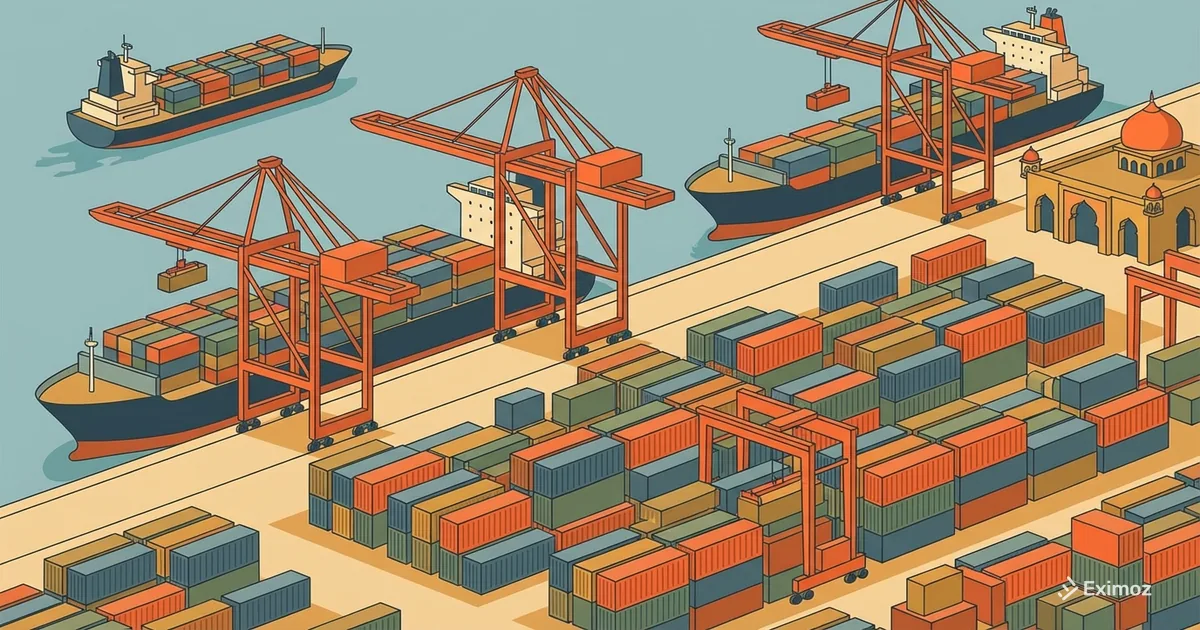
The RoDTEP (Remission of Duties and Taxes on Exported Products) scheme refunds embedded central, state, and local taxes on exported goods through electronic scrips issued via ICEGATE. Over 1.11 lakh exporters claimed Rs 15,757 crore under RoDTEP in FY 2025-26 (up to December 2025), and the government allocated Rs 18,233 crore for the scheme that year. However, in February 2026, DGFT cut RoDTEP rates by 50% for most non-agricultural product categories. If you are exporting right now, you need to know exactly how the scheme works, what changed, and how to claim what you are still owed.
What is the RoDTEP scheme and who is eligible?
RoDTEP replaced the Merchandise Exports from India Scheme (MEIS) on January 1, 2021. The switch happened because the WTO ruled that MEIS violated subsidy rules. RoDTEP was designed to be WTO-compliant from the start, since it only refunds actual taxes paid rather than providing an export subsidy.
The scheme covers both manufacturer exporters and merchant exporters shipping goods with India origin. Your product needs to be listed in the RoDTEP schedule (Appendix 4R for DTA exports, Appendix 4RE for SEZ/EOU/AA holders) with a corresponding rate against its HS code.
Who is eligible:
-
Manufacturer exporters producing and exporting goods from India
-
Merchant exporters who procure domestically manufactured goods for export
-
SEZ and EOU units (reinstated from June 1, 2025 via DGFT Notification No. 11/2025-26)
-
Advance Authorization holders
Who is not eligible:
-
Exporters of products not listed in the RoDTEP schedule
-
Re-exported imported goods (no India-origin manufacturing)
-
Products where the exporter has already claimed a full refund of all embedded taxes through other schemes
What taxes does RoDTEP refund?
RoDTEP targets taxes that are not rebated or refunded through any other mechanism. These are taxes embedded in the cost of exported goods that exporters previously had to absorb.
Taxes covered under RoDTEP:
| Tax type | Examples |
|---|---|
| Central excise duty on fuel | Diesel and petrol used in manufacturing and transport |
| State VAT on fuel and inputs | VAT on raw materials in states where input tax credit is unavailable |
| Electricity duty | State-level duty charged on power used in manufacturing |
| Mandi tax | Agricultural produce market fees on raw material procurement |
| Stamp duty | On export-related documentation and transactions |
| Coal cess | Clean energy cess on coal used in production |
| Central excise on transportation fuel | Duty on fuel used for transporting goods to port |
The scheme does not cover taxes already refunded through GST input tax credit, customs duty drawback, or any other existing refund mechanism. In other words, RoDTEP covers only the gap: taxes that fall through the cracks of other refund systems.
How do I claim RoDTEP benefits step by step?
Figure 1: Step-by-step RoDTEP claim and utilization process on the ICEGATE portal
Claiming RoDTEP is a six-step digital process, entirely on ICEGATE. There is no physical paperwork involved.
-
Declare RODTEPY in Shipping Bill. Select "RODTEPY" in the SW_INFO_TYPE Table on ICEGATE and submit declaration with STATEMENT CODE = RD001.
-
EGM filing by carrier. The shipping line or airline files the Export General Manifest on ICEGATE confirming goods have left India.
-
Scroll generated by Customs. Customs processes the claim on ICEGATE and generates a scroll showing the admissible refund amount per Shipping Bill.
-
Create RoDTEP Credit Ledger. One-time setup: log into ICEGATE, go to e-Scrip Credit Ledger, select "RoDTEP" and submit.
-
Generate e-scrip from scroll. Select eligible Shipping Bills from the scroll on ICEGATE and generate the e-scrip. A unique scrip number is created and credit appears in your ledger.
-
Use for BCD payment or transfer. Apply the e-scrip against Basic Customs Duty on imports via ICEGATE, or transfer it to another IEC holder.
Step 1 is where most exporters lose their benefit. If you forget to declare "RODTEPY" in the Shipping Bill at the time of export, you permanently lose the RoDTEP benefit for that shipment. There is no retrospective claim mechanism. This is the single most common reason exporters miss their refund.
Step 4 (creating the credit ledger) is a one-time setup. Once your ledger exists, new scrips are automatically credited to it after you generate them from scrolls.
The validity of unutilised e-scrips is two years from the date of creation. If you do not use or transfer a scrip within two years, it expires.
How can I use or transfer RoDTEP e-scrips?
Once you have an e-scrip in your ICEGATE credit ledger, you have two options:
Use it for import duty payment. Apply the scrip value against Basic Customs Duty (BCD) on your own imports. This works exactly like a credit note. When filing a Bill of Entry, you can select the e-scrip as a payment method for the BCD component.
Transfer it to another IEC holder. If you do not import goods yourself, you can electronically transfer the e-scrip to any other entity holding a valid Import Export Code (IEC). The transfer happens entirely on ICEGATE. The recipient can then use the scrip for their own BCD payments.
In practice, many merchant exporters who do not import at all choose to transfer their scrips. The transferred scrip retains its original validity period, so the recipient gets whatever time is remaining on the two-year clock.
You can check the status of all your scrips (Active, Utilised, Transferred, Transfer Pending) in the Scrip Details section of ICEGATE's e-Scrip module.
What changed with RoDTEP in 2026?
Three things happened in quick succession, and exporters need to track all of them:
1. The February 2026 rate cut. On February 23, 2026, DGFT issued Notification No. 60/2025-26, cutting RoDTEP rates by 50% across all HS lines in Appendix 4R and 4RE. Value caps were also halved. This applied immediately to all exports from that date. The only exception: products under ITC HS Chapters 01 to 24 (agricultural commodities and processed food) retain their original rates per a corrigendum issued on February 24, 2026.
For a product that previously had a RoDTEP rate of 2% of FOB value, the new rate is 1%. If the value cap was Rs 10 per unit, it is now Rs 5 per unit.
2. The FY 2026-27 budget cut. The government reduced the RoDTEP allocation for FY 2026-27 to Rs 10,000 crore, a 45% reduction from the FY 2025-26 allocation of Rs 18,233 crore. The government is clearly shrinking the scheme's fiscal footprint.
3. The restoration promise. Despite the budget cut, the Commerce Ministry has indicated that full RoDTEP benefits will be restored from April 1, 2026. As of mid-March 2026, the restoration notification has not yet been issued. Exporters should monitor DGFT notifications for confirmation.
The practical impact: if you are filing Shipping Bills right now (March 2026), your RoDTEP benefit is at 50% of the originally notified rate for most non-agricultural products. Factor this into your export pricing.
Frequently asked questions
How much of a RoDTEP refund will I get?
Rates vary by HS code and typically range from 0.3% to 4.3% of FOB value. Some products also have a per-unit value cap. Check Appendix 4R on the DGFT website (dgft.gov.in) for your product's specific rate. Note that as of February 23, 2026, rates for non-agricultural products (HS Chapters 25 onwards) have been halved.
Can merchant exporters claim RoDTEP?
Yes. Both manufacturer exporters and merchant exporters are eligible under RoDTEP. The requirement is that the exported goods must be of Indian origin and listed in the RoDTEP schedule with a notified rate.
What happens if I forget to declare RoDTEP in the shipping bill?
You permanently lose the benefit for that shipment. The declaration must be made at the time of filing the Shipping Bill by selecting "RODTEPY" in the SW_INFO_TYPE Table. ICEGATE does not allow retrospective RoDTEP claims, and there is no amendment route for this specific omission.
Can RoDTEP scrips be sold or transferred?
Yes. E-scrips can be electronically transferred to any other IEC holder through the ICEGATE portal. The transfer is digital and the recipient can use the scrip for Basic Customs Duty payments on their imports. The scrip retains its original two-year validity period.
Is RoDTEP available for SEZ and EOU units?
Yes. RoDTEP benefits were extended to SEZ units, EOUs, and Advance Authorization holders from June 1, 2025 (DGFT Notification No. 11/2025-26 dated May 26, 2025). Their rates are listed in Appendix 4RE. The scheme has been extended until March 31, 2026 via DGFT Notification No. 35/2025.
Claiming RoDTEP correctly starts with getting the HS code right on your Shipping Bill. A wrong HS code means the wrong RoDTEP rate, or worse, no RoDTEP benefit at all if the code maps to an unlisted product. Eximoz automates HS classification for Indian exporters and runs pre-filing checks to catch errors before your Shipping Bill is submitted. If your team handles high export volumes, take a look: eximoz.com