
The HSN code for ceramic tiles in India falls under Chapter 69 of the Customs Tariff: HSN 6907. All ceramic tiles, both glazed and unglazed, are classified under this single heading, with the sub-heading determined by water absorption rate. Both carry a Basic Customs Duty of 15% and IGST of 18%. For Marble and Natural Stone Tiles, the relevant codes sit under Chapter 68, specifically HSN 6802. Misclassifying between Chapter 69 and Chapter 68 is a frequent trigger for customs disputes because the two chapters carry different duty rates and regulatory treatment.
What are the HSN codes for ceramic tiles in India?
Ceramic tiles are classified under Chapter 69 of the Indian Customs Tariff. Two 8-digit ITC-HS codes cover most commercial imports:
6907: Ceramic Tiles (Glazed and Unglazed)
| ITC-HS Code | Product Description |
|---|---|
| 6907.10 | Flags, paving or wall tiles, of a maximum dimension of 10 cm or less |
| 6907.21 | Ceramic tiles with water absorption coefficient of 0.5% or less |
| 6907.22 | Ceramic tiles with water absorption coefficient exceeding 0.5% but not exceeding 10% |
| 6907.23 | Ceramic tiles with water absorption coefficient exceeding 10% |
| 6907.29 | Ceramic tiles, other |
| 6907.30 | Ceramic mosaic cubes, of a maximum dimension of 10 cm or less |
| 6907.40 | Ceramic tiles, not elsewhere specified |
Heading 6908 was deleted in HS 2017 revisions. All ceramic tiles, glazed and unglazed, now fall under 6907. The sub-heading is determined by water absorption rate.
The water absorption coefficient (WAC) is the key classification driver for Chapter 69 tiles. This is a lab-tested value, not a visual judgment call. Tiles with WAC of 0.5% or less typically go into 6907.21, those are your full-body vitrified and porcelain tiles. Tiles with WAC above 10% fall into 6907.23, the more porous, traditional ceramic types. Importers sometimes misclassify based on how a tile looks rather than its actual WAC test result, which creates problems when the customs officer requests supporting documentation.
What customs duty applies to ceramic tile imports?
The BCD on ceramic tiles under Chapter 69 is 15%, applied as the MFN rate. On top of that, IGST at 18% applies to all ceramic tile imports, calculated on the assessable value plus BCD.
There is also an anti-dumping component. The DGFT has imposed ADD on imports of Vitrified Tiles from China, with rates ranging from USD 0.32 to USD 1.03 per square metre depending on the manufacturer. This was notified via DGFT Trade Notice and is periodically reviewed. Importers who leave this out of the BoE calculation face customs demand notices with interest later. Before filing any Bill of Entry for Chinese vitrified tiles, checking the current ADD schedule is a necessary step, not a nice-to-have.
Putting it together: total landed cost equals CIF value plus BCD at 15%, plus ADD where applicable, plus IGST at 18% on the full assessable value including both duties.
What HSN codes apply to marble and natural stone tiles?
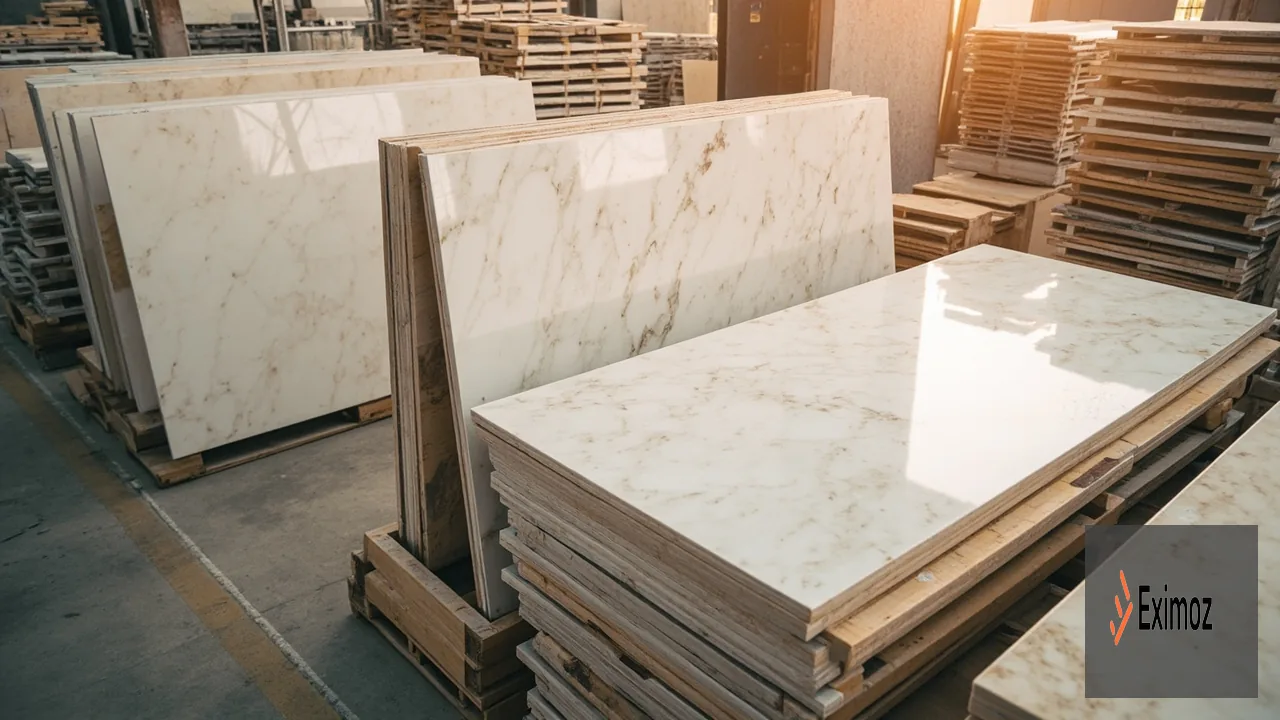
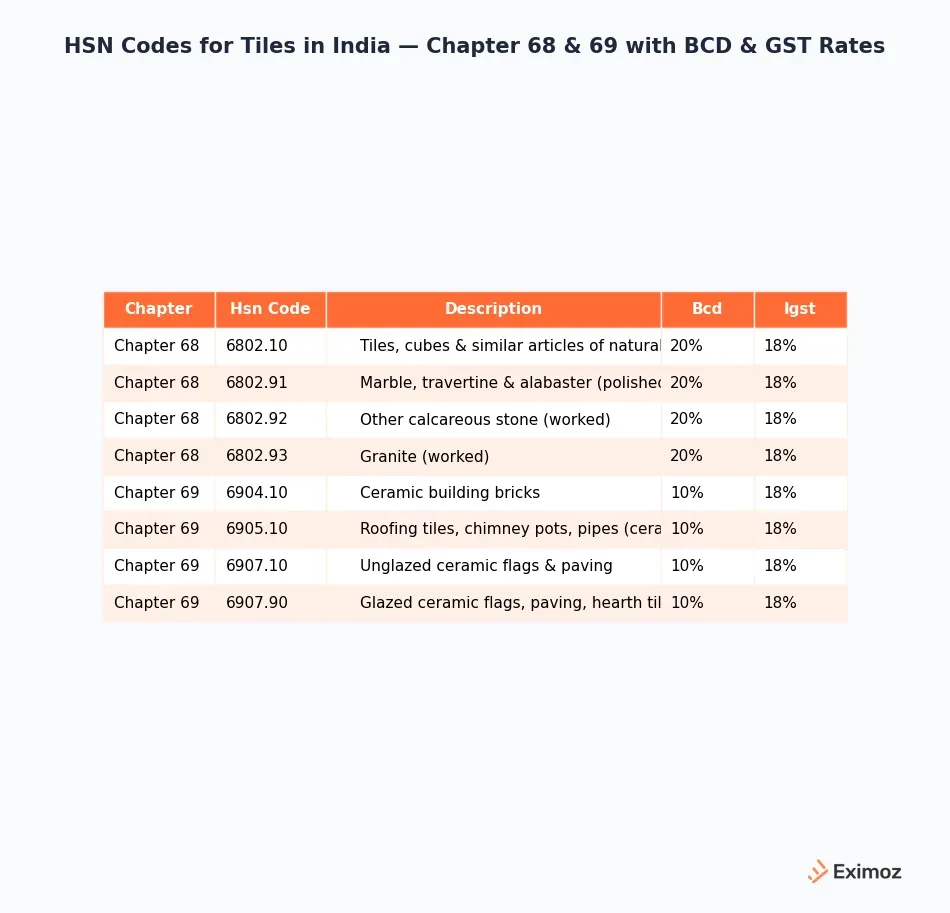
Marble, granite, slate, and other natural stone tiles fall under Chapter 68, specifically HSN 6802. This covers worked monumental and building stone including tiles, slabs, and shapes cut to size.
| ITC-HS Code | Product Description |
|---|---|
| 6802.91 | Marble, travertine and alabaster, polished, decorated or otherwise worked |
| 6802.92 | Calcareous stone including marble, polished, decorated or otherwise worked |
| 6802.93 | Granite, polished, decorated or otherwise worked |
| 6802.99 | Other stone, polished, decorated or otherwise worked |
A recurring dispute in this section centres on the difference between 6802.21 (simply sawn) and 6802.91 (polished or otherwise worked). A marble tile that has been cut, ground, and polished belongs in 6802.91, even a light polish still counts as worked stone. Customs officers at major ports regularly question classifications where importers declared 6802.21 for polished tiles, usually with the intent of supporting a lower declared value. BCD on polished marble under 6802.91 is 40%, one of the higher protective rates in the Indian tariff.
What duty applies to marble and natural stone tile imports?
BCD on articles under HSN 6802 varies by sub-heading. The BCD for polished marble tiles under 6802.91 is 40%, applied to protect domestic industry. Verify rates for other 8-digit codes at https://www.cbic.gov.in/entities/customsTariff.
GST on natural stone tiles is 18%, the same rate as ceramic tiles. One difference worth noting: there is no anti-dumping duty currently in force on natural stone tile imports from China. This makes sourcing marble or granite tiles from China comparatively less complicated on the duty side, since the ADD that applies to Chinese ceramic and vitrified tiles does not apply here.
Importers of natural stone tiles should pay attention to valuation, particularly when tiles arrive in large slabs intended for domestic cutting. Customs may examine whether the declared value reflects the condition and dimensions of the goods as imported, or whether partial processing has been declared at an earlier stage to reduce the duty burden.
How do I classify tiles correctly at the customs border?
Three things matter here: the material, the WAC for ceramic tiles, and how far the processing has gone.
Start with the material. If it is clay-based and fired, it is Chapter 69. If it is natural stone, it is Chapter 68. Get this wrong and everything else follows the wrong sub-chapter.
For ceramic tiles, use the WAC test result. The IS 1363 standard or equivalent gives you the number you need. Vitrified tiles almost always come in below 0.5% WAC, which puts them in 6907.21. Porous tiles with WAC above 10% go into 6907.23. If you are importing a new product type and do not have the test report, get it before you file the BoE.
For natural stone tiles, look at the surface finish. Polished, honed, or otherwise worked tiles go under 6802.91. Simply sawn tiles go under 6802.21. Surface treatments like leathering, brushing, or flaming all count as worked stone, so they also belong in 6802.91.
Check the ADD schedule before filing. For Chinese ceramic and vitrified tiles, the anti-dumping duty of USD 0.32 to USD 1.03 per square metre must be included in the BoE assessable value. Using the wrong manufacturer's rate when you know the actual supplier is a misdeclaration.
Declare the full 8-digit ITC-HS code in the Bill of Entry. ICEGATE and customs officers expect the 8-digit code, not just the 4-digit chapter heading. Leaving it at 6907 without the two additional digits will generate a query.
Frequently Asked Questions
What is the HSN code for vitrified tiles?
Vitrified tiles fall under HSN 6907.21, classified by water absorption coefficient rather than glaze type. Full-body porcelain tiles are most commonly classified under 6907.21. Vitrified tiles sourced from China also attract anti-dumping duty of USD 0.32 to USD 1.03 per square metre, depending on the manufacturer, as notified by DGFT.
Is the GST rate the same for ceramic tiles and marble tiles?
Yes. Both ceramic tiles under Chapter 69 and natural stone tiles under Chapter 68 attract GST at 18%. BCD is different: 15% for ceramic tiles and 40% for polished marble under 6802.91. The uniform GST rate does not extend to customs duty.
How is the anti-dumping duty on Chinese vitrified tiles calculated?
The ADD is a specific duty, charged per square metre of tile imported, not as a percentage of value. The rate falls between USD 0.32 and USD 1.03 per sqm, varying by Chinese manufacturer. The correct rate applies based on the supplier named in the shipping documents. Applying a different manufacturer's rate when the actual supplier is known is a misdeclaration that can trigger customs penalties.
Can I use a single HSN code for all tiles in a mixed shipment?
No. A container holding different tile types, for example, porcelain tiles alongside natural stone tiles, requires separate BoE line items, each with its own 8-digit HSN code. Mixing classifications into a single line item is a common trigger for customs scrutiny and post-clearance audits.
What are the consequences of misclassifying tiles at import?
Misclassifying tiles to take advantage of a lower BCD rate is treated as misdeclaration under the Customs Act. Customs will demand the difference in duty with interest running from the date of import, and may impose penalties on top. Intentional misclassification can escalate to adjudication proceedings and, in serious cases, lead to licence cancellation.
Getting tile classification right from the first Bill of Entry saves more than just duty. It prevents the time and cost of post-clearance disputes, keeps your CHA relationship clean, and means your compliance record stays unblemished going into any regulatory review. Eximoz automates HS code classification for ceramic and natural stone products, checks declared HSN codes against shipment documents, and flags ADD applicability for Chinese tile imports before the BoE is filed. Book a demo to see how it works.