
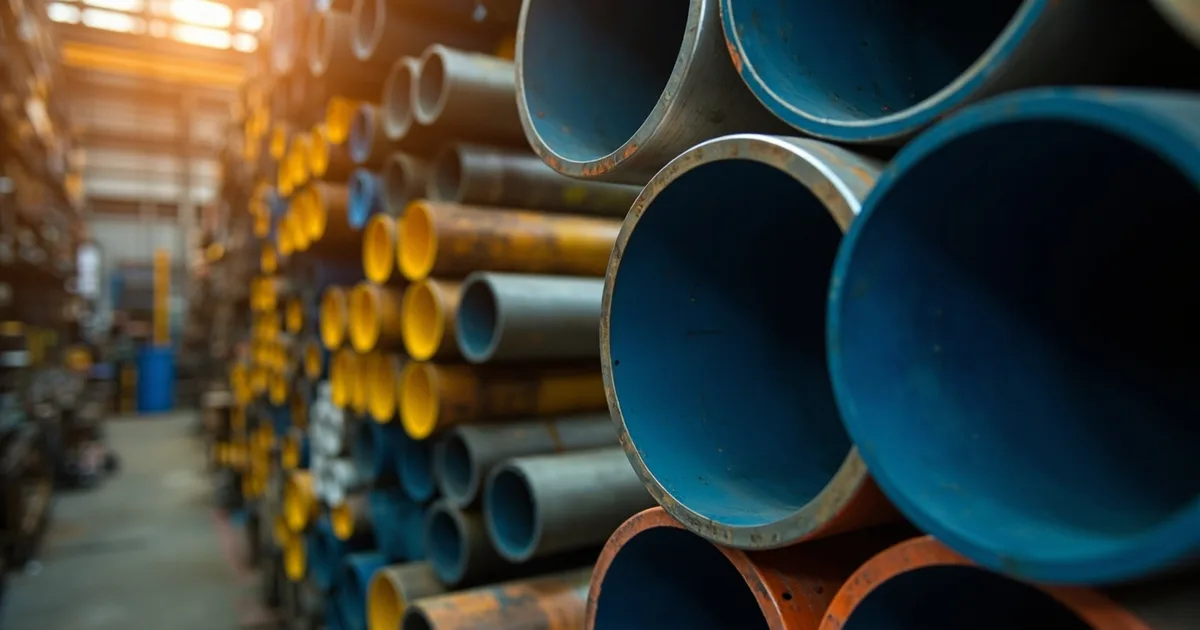
The main HSN code for pipes and tubes in India depends on material and construction. Seamless steel pipes fall under HSN 7304, welded steel pipes under HSN 7306, plastic and PVC pipes under HSN 3917, structural GI pipe assemblies under HSN 7308, and steel pipe fittings under HSN 7307. Most pipe categories attract 18% GST. For many standard imports, customs duty is calculated as BCD plus SWS at 10% of BCD, then IGST on the assessable value plus BCD plus SWS.
Pipe classification starts with material.
Iron and steel pipes are usually classified under Chapter 73 of the Indian Customs Tariff. Plastic pipes, including PVC, PE and PP pipes, fall under Chapter 39.
The practical split is simple. Use HSN 7304 for seamless steel tubes and pipes. Use HSN 7306 for welded or seamed steel tubes and pipes. Use HSN 3917 for plastic pipes, hoses and fittings.
GI pipes need extra care. A GI pipe used for plumbing may fall under HSN 7306. A GI member used as part of a structure, frame, scaffold or support system may fall under HSN 7308.
According to the CBIC Customs Tariff Schedule, Chapter 73 covers articles of iron or steel. Chapter 39 covers plastics and articles of plastics.
Which HSN code applies to steel pipes, PVC pipes, GI pipes and fittings?
The table below gives the usual starting point for import classification. The final 8-digit code depends on material grade, shape, wall thickness, end use and product literature.
| Product type | Main HSN code | Typical use | GST rate | Classification note |
|---|---|---|---|---|
| Seamless steel pipes and tubes | 7304 | Oil, gas, boiler, pressure and precision use | 18% | No weld seam |
| Welded MS or steel pipes | 7306 | Plumbing, fabrication, low-pressure lines | 18% | Welded or seamed pipe |
| PVC, PE and PP pipes | 3917 | Water supply, irrigation, ducts and hoses | 18% | Plastic tubes, pipes, hoses and fittings |
| GI plumbing pipes | 7306 | Water transmission and fluid handling | 18% | Usually treated as welded steel pipe |
| GI structural pipe assemblies | 7308 | Scaffolding, frames, towers, supports | 18% | Classified by structural use |
| Steel pipe fittings | 7307 | Elbows, tees, reducers, flanges, unions | 18% | Separate from the pipe itself |
| Plastic pipe fittings | 3917.40 | Plastic elbows, tees and similar fittings | 18% | Covered within plastic pipe heading |
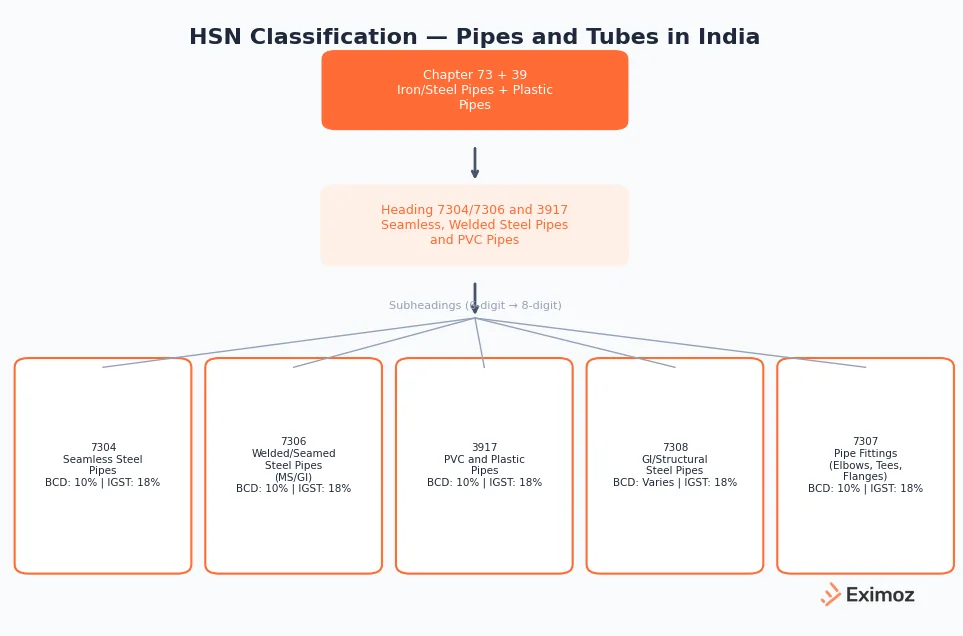
Figure 1: HSN code hierarchy for pipes and tubes in India
For steel pipes, the difference between 7304 and 7306 is the weld seam. Seamless pipe is made without a seam. Welded pipe is formed and joined along a seam.
For PVC pipes, HSN 3917 is the parent heading. Common sub-headings include 3917.21 for polyethylene, 3917.22 for polypropylene and 3917.23 for polyvinyl chloride.
How do you choose between HSN 7304, 7306, 3917, 7308 and 7307?
Use a short decision path before filing the Bill of Entry (BoE).
First, identify the material. If the product is plastic, start with HSN 3917. If it is iron, steel or alloy steel, start with Chapter 73.
Second, check how the pipe is made. Seamless steel pipe points to HSN 7304. Welded or seamed pipe points to HSN 7306.
Third, check the end use. A pipe used to carry water, gas, oil or chemicals is usually treated as a pipe. A tubular member used in a frame or support may move to HSN 7308.
Fourth, separate fittings from pipes. Steel elbows, tees, reducers, flanges and unions are normally classified under HSN 7307. Plastic fittings are usually covered under HSN 3917.40.
Do not classify only by trade name. Terms like MS pipe, GI pipe or industrial pipe are not enough for customs. Product drawings, mill test certificates, coating details and invoices should support the HSN code.
What import duty applies to pipes and tubes in India?
For many standard pipe imports, the duty stack has three main parts: Basic Customs Duty (BCD), Social Welfare Surcharge (SWS) and Integrated Goods and Services Tax (IGST).
For a common case with 10% BCD and 18% IGST, the calculation is:
| Duty component | Calculation | Result on base value of 100 |
|---|---|---|
| Assessable value | Base customs value | 100.00 |
| BCD | 10% of 100 | 10.00 |
| SWS | 10% of BCD | 1.00 |
| IGST | 18% of 111 | 19.98 |
| Total duty burden | BCD + SWS + IGST | 30.98 |
So the effective customs burden is 30.98% in this example.
SWS is not a standalone 1% rate. It is 10% of the BCD amount. It equals 1% of the base value only when BCD is 10%.
IGST is not calculated only on the base customs value. It is calculated on the assessable value plus BCD plus SWS. This is why adding 10% + 1% + 18% gives the wrong answer.
Importers should verify live rates before filing. BCD can vary by tariff line, material, exemption notification and origin. Anti-dumping duty may also apply for some pipe categories and countries of origin.
What are common HSN classification mistakes for pipe imports?
The most common error is using HSN 7306 for all steel pipes. Seamless pipes should be checked under HSN 7304, especially for pressure, boiler and oilfield applications.
Another error is treating GI pipes as one category. A GI plumbing pipe and a GI structural member may not share the same classification. End use matters.
A third error is classifying fittings under the pipe code. Steel fittings usually belong under HSN 7307. Plastic fittings usually sit within HSN 3917.
The duty calculation also causes mistakes. SWS must be shown as 10% of BCD. It should not be described as a separate 1% levy, except as a result when BCD is 10%.
What are the frequently asked questions about pipe HSN codes in India?
What is the HSN code for steel pipes in India?
Seamless steel pipes are classified under HSN 7304. Welded or seamed steel pipes, including many MS and GI plumbing pipes, are classified under HSN 7306. Both generally attract 18% GST.
What is the HSN code for PVC pipes?
PVC pipes fall under HSN 3917 in India. The common PVC sub-heading is 3917.23 for tubes, pipes and hoses of polyvinyl chloride. Plastic fittings such as elbows and tees are usually classified under 3917.40.
What is the import duty on steel pipes in India?
For many standard steel pipe imports, BCD is 10%, SWS is 10% of BCD and IGST is 18% on assessable value plus BCD plus SWS. When BCD is 10%, the effective customs burden is about 30.98%. Check CBIC and DGFT updates for exemptions, origin rules and anti-dumping duties.
What is the HSN code for GI pipes?
GI pipes used for plumbing or fluid movement are commonly classified under HSN 7306. GI pipes used as structural members, scaffolding or support frames may fall under HSN 7308. The invoice and technical use should support the chosen code.
What is the GST rate on pipes and tubes in India?
Most pipes and tubes under HSN 7304, 7306, 7308 and 3917 attract 18% GST. Steel fittings under HSN 7307 and plastic fittings under HSN 3917 also generally attract 18% GST. Always confirm the final rate against current CBIC GST notifications.
Which official sources should importers check before filing?
Use official sources before finalising the BoE. The CBIC Customs Tariff Schedule gives tariff headings and customs duty structure. The CBIC GST portal provides GST rate notifications. The DGFT portal should be checked for ITC-HS classification, import policy conditions and origin-linked restrictions.
Getting pipe classification right across many SKUs is detailed work. Eximoz helps Indian importers and exporters automate HSN classification and flag pre-clearance issues before the shipment reaches the port. Useful if your team handles repeated pipe, fittings or industrial material imports: eximoz.com