

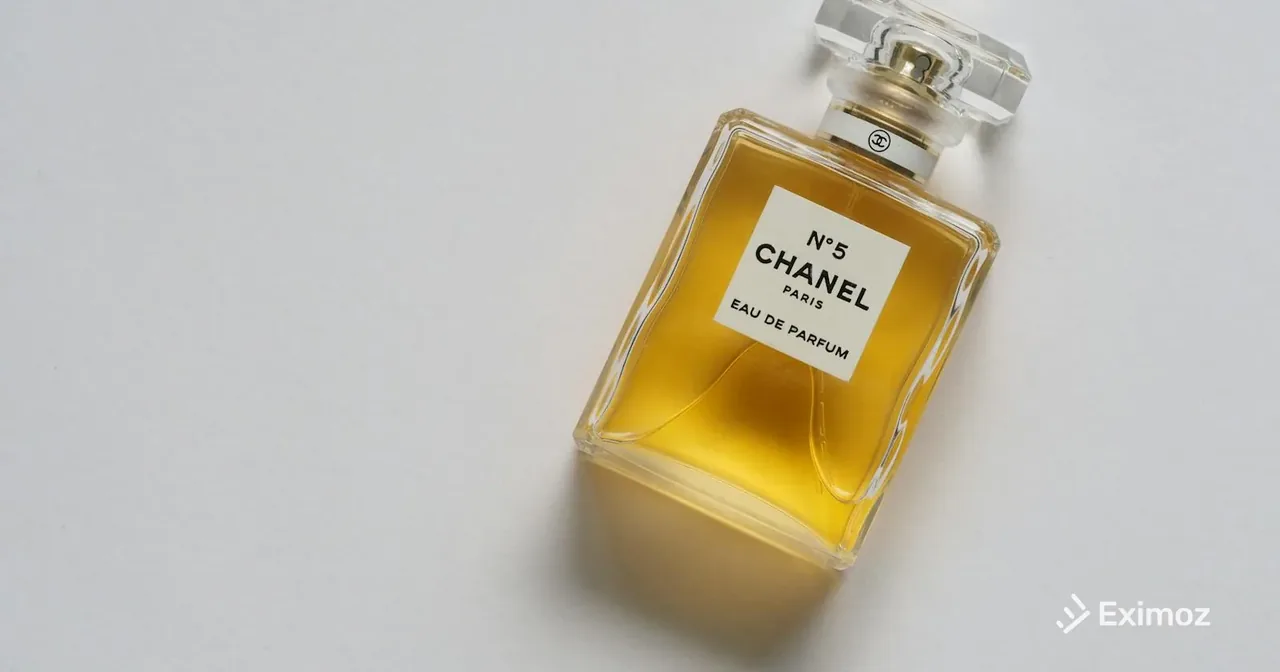
The HSN code for perfume in India is 3303, under Chapter 33 of the Customs Tariff Act, 1975. This heading covers perfumes and toilet waters, including eau de parfum, eau de toilette, and cologne. Deodorants and antiperspirants fall under a separate heading, 3307 20, while natural attars are classified under 3301 29 if they are pure essential oils, or under 3303 if blended with alcohol or synthetic compounds.
What is the HSN code for perfume and fragrance in India?
Chapter 33 of the Indian Customs Tariff covers essential oils, perfumery, cosmetics, and toilet preparations. Fragrance products are split across four headings based on composition and intended use:
- 3301: Essential oils (including natural attars made by hydro-distillation)
- 3302: Mixtures of odoriferous substances and perfume concentrates (industrial inputs)
- 3303: Perfumes and toilet waters (finished retail products)
- 3307: Deodorants, aftershave, bath preparations, and room deodorisers
For a finished bottle of perfume, HSN 3303 is the correct classification. The 8-digit sub-headings: 3303 00 10 (perfume/eau de parfum), 3303 00 20 (eau de toilette), 3303 00 30 (cologne). Classification follows GRI Rule 1: if the product's primary function is fragrance application on the body, it goes under 3303.
How are deodorants and body sprays classified differently from perfume?
This is the most common classification error in fragrances. Deodorants and antiperspirants go under HSN 3307 20, not 3303, even though they contain fragrance. The distinction is function: 3303 is for fragrance application, 3307 20 is for body odour prevention.
Body mists are the grey area. A body mist marketed as a "fragrance mist" with no deodorant claims falls under 3303. A "deodorant body spray" goes under 3307 20. Marketing claims and product labelling drive the classification. Room fresheners sit under 3307 49. Aftershave preparations are 3307 10.
What customs duty and GST apply to perfume imports?
All products under HSN 3303 carry 28% GST, the top slab. Deodorants (3307 20) also attract 28%. Perfumes attract GST compensation cess on top, making them one of the most heavily taxed consumer categories alongside tobacco and luxury cars.
| Product | HSN Code | BCD | IGST | GST (Domestic) |
|---|---|---|---|---|
| Perfume / Eau de Parfum | 3303 00 10 | 10% | 28% | 28% |
| Eau de Toilette | 3303 00 20 | 10% | 28% | 28% |
| Cologne | 3303 00 30 | 10% | 28% | 28% |
| Deodorant Spray | 3307 20 10 | 10% | 28% | 28% |
| Antiperspirant | 3307 20 20 | 10% | 28% | 28% |
| Room Freshener | 3307 49 | 10% | 28% | 28% |
| Natural Attar (essential oil) | 3301 29 | 5% | 18% | 18% |
| Incense / Agarbatti | 3307 41 | 10% | 12% | 12% |
| Aftershave | 3307 10 | 10% | 28% | 28% |
| Perfume Concentrate | 3302 | 10% | 18% | 18% |
Source: CBIC Customs Tariff Schedule and GST Rate Schedule, Schedule IV (28% slab)
The effective landed cost for imported perfume is roughly 42–45% above CIF value, after BCD, Social Welfare Surcharge (10% on BCD), and IGST. This is why many international brands import concentrate (3302, at 18% IGST) and bottle locally rather than importing finished products at 28%.
Imported cosmetics, including perfumes, must also comply with the Drugs and Cosmetics Act, 1940, and require CDSCO registration. BIS standards IS 6608 (perfumes) and IS 6609 (eau de cologne) apply.
How is traditional attar classified under HSN?
The HSN code for attar depends on composition. Natural attars from Kannauj (UP) produced by hydro-distillation of flowers (rose, jasmine, kewda) into a sandalwood oil base are classified under HSN 3301 29 (essential oils, other than citrus). BCD is 5% and GST is 18%.
Synthetic attars or attars blended with alcohol fall under HSN 3303. These attract 10% BCD and 28% GST.
The test is simple: pure essential oil base = 3301. Add alcohol or synthetic aroma chemicals = 3303. For exporters, correct classification under 3301 29 means lower duty rates in many destination countries that give preferential treatment to natural essential oils.
What are common classification errors for fragrance products?
- Deodorants under 3303 instead of 3307 20. Function determines the heading, not fragrance content. If it prevents body odour, it is 3307 20.
- Perfume concentrate (3302) vs. finished perfume (3303). Concentrates are industrial inputs at 18% IGST. Classifying finished retail perfume as 3302 to save duty triggers re-assessment and penalties.
- Natural attars as perfume. Pure essential-oil attars belong under 3301 (5% BCD, 18% GST), not 3303 (10% BCD, 28% GST). Getting this wrong means overpaying on every shipment.
- Aerosol perfume misclassification. Perfume in aerosol cans stays under 3303. Classification follows the product, not the delivery mechanism.
- Cosmetic vs. drug overlap. Fragrance products with therapeutic claims ("aromatherapy" stress relief) can be reclassified from Chapter 33 to Chapter 30 (pharmaceuticals), changing duty and regulatory requirements entirely.
Frequently Asked Questions
What is the GST rate on perfume in India?
Perfumes under HSN 3303 attract 28% GST, the highest slab. Deodorants (3307 20) also attract 28%. Perfumes also attract GST compensation cess, putting them among the most taxed consumer products in India alongside luxury cars and tobacco.
What is the customs duty on importing perfume into India?
Imported perfumes attract 10% BCD plus 28% IGST, along with Social Welfare Surcharge at 10% of BCD. The effective landed cost is roughly 42–45% above CIF value. Many brands import concentrate (3302, 18% IGST) and bottle in India to reduce the duty burden.
What is the HSN code for deodorant spray?
Deodorant sprays are classified under HSN 3307 20, not under 3303. The distinction is function: 3303 is for fragrance application, 3307 20 is for odour prevention. Both attract 28% GST.
How is Indian attar classified for customs purposes?
Natural attars made by hydro-distillation into a sandalwood oil base fall under HSN 3301 29 (essential oils) at 5% BCD and 18% GST. Synthetic attars or those mixed with alcohol go under 3303 at 10% BCD and 28% GST. The classification depends on whether the product is natural essential oil or synthetic/alcohol-based.
What BIS standards apply to imported perfumes?
Imported perfumes must comply with BIS standards IS 6608 (perfumes) and IS 6609 (eau de cologne), plus the Drugs and Cosmetics Act, 1940. CDSCO registration is required. Shelf-life declarations, ingredient labelling, and batch compliance are mandatory at customs clearance.
Classifying fragrance products between 3301, 3302, 3303, and 3307 is harder than it looks, especially across multiple product types in the same shipment. Eximoz automates this by analysing product composition and matching it to the correct heading, catching duty-rate errors before the shipment reaches the port. Worth a look if your team handles perfume, attar, or cosmetics imports: eximoz.com